Saturday
November 14, 2026
8:15 PM
Basilica of the Holy Trinity, Dominican Friars
ul. Stolarska 12, Kraków
FREE ADMISSION
Join the event on Facebook
Capilla del Nuevo Mundo presents a musical programme featuring works from the archives of the Jesuit missions of Chiquitos and Moxos, in Bolivia. Beginning in 1682, the Jesuits established a series of mission settlements in the territories that now form part of eastern Bolivia, where they carried out their missionary work among the Indigenous populations of the region. These missions developed into Indigenous communities organised under the direction of Jesuit missionaries.
Within these communities, music played a central role in the process of cultural integration. Indigenous people acquired knowledge of European music taught by the missionaries; they learned to sing, play and build instruments, compose music and transcribe musical works. Some of the repertoire performed in the missions had been brought from Europe. However, composers were also active in the Americas, including Indigenous composers, Europeans who had settled in the region, and people of mixed Indigenous and European ancestry. Historical chronicles report that the musical ensembles of the missions often included a large number of musicians, in some cases as many as forty. Indigenous people did not merely perform the music; they also played an active role in creating, transmitting and preserving the musical repertoire.
Following the expulsion of the Jesuits from the Spanish territories in the Americas in 1767, musical activity continued in some of the missions. This made it possible for a substantial part of the repertoire to survive to the present day. The musical heritage preserved in the archives of Chiquitos and Moxos has attracted the interest of musicians and musicologists from around the world, both for the richness and diversity of the repertoire and for its historical value and what it reveals about the processes of cultural exchange and transformation that took place in the missions. The music preserved in these collections is the result of a complex process through which Indigenous communities assimilated and appropriated European Baroque music. In some localities, the repertoire was preserved not only in written form: the music continued to be performed, sustaining a living musical tradition that has survived to the present day.
Our upcoming concert, Beatus Vir, features works from the archives of Chiquitos and Moxos. The selected pieces explore themes of life, death and the afterlife from the perspective of a musical tradition that emerged from the encounter between Jesuits and Indigenous peoples. Beyond its beauty and distinctive history, this music serves as a space for intercultural dialogue across time. Born in that historical context, it now opens up a new dialogue between this heritage and our present-day reality.
Taken as a whole, the works in this programme address the question of transcendence, offering a vision of hope. The history of this repertoire, in turn, extends that same idea in its own way: reaching beyond its original context, this music has endured through time and continues to acquire new meanings. In this way, the history of these works carries forward into the present the dialogue between cultures that gave rise to this musical tradition.
Venue
Basilica of the Holy Trinity
Dominican Friars
ul. Stolarska 12, Kraków
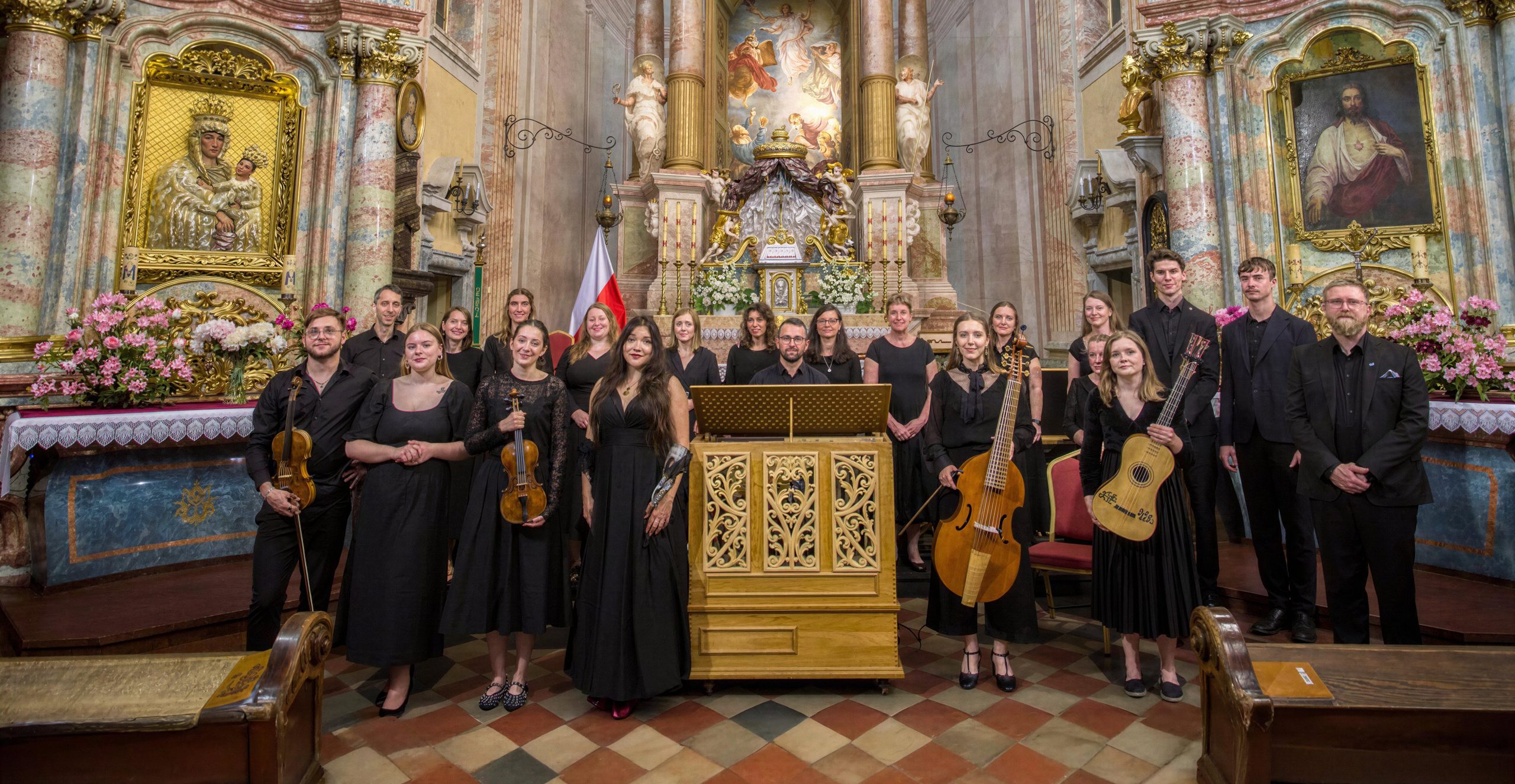
Performers
Zuzanna Hwang-Cempla, soprano
Dorota Kawula, alto
Bartłomiej Chorąży, tenor
Ece Naz Aydoğdu-Kochel, violin
Maria Zborowska, violin
Marcin Kranz, theorbo
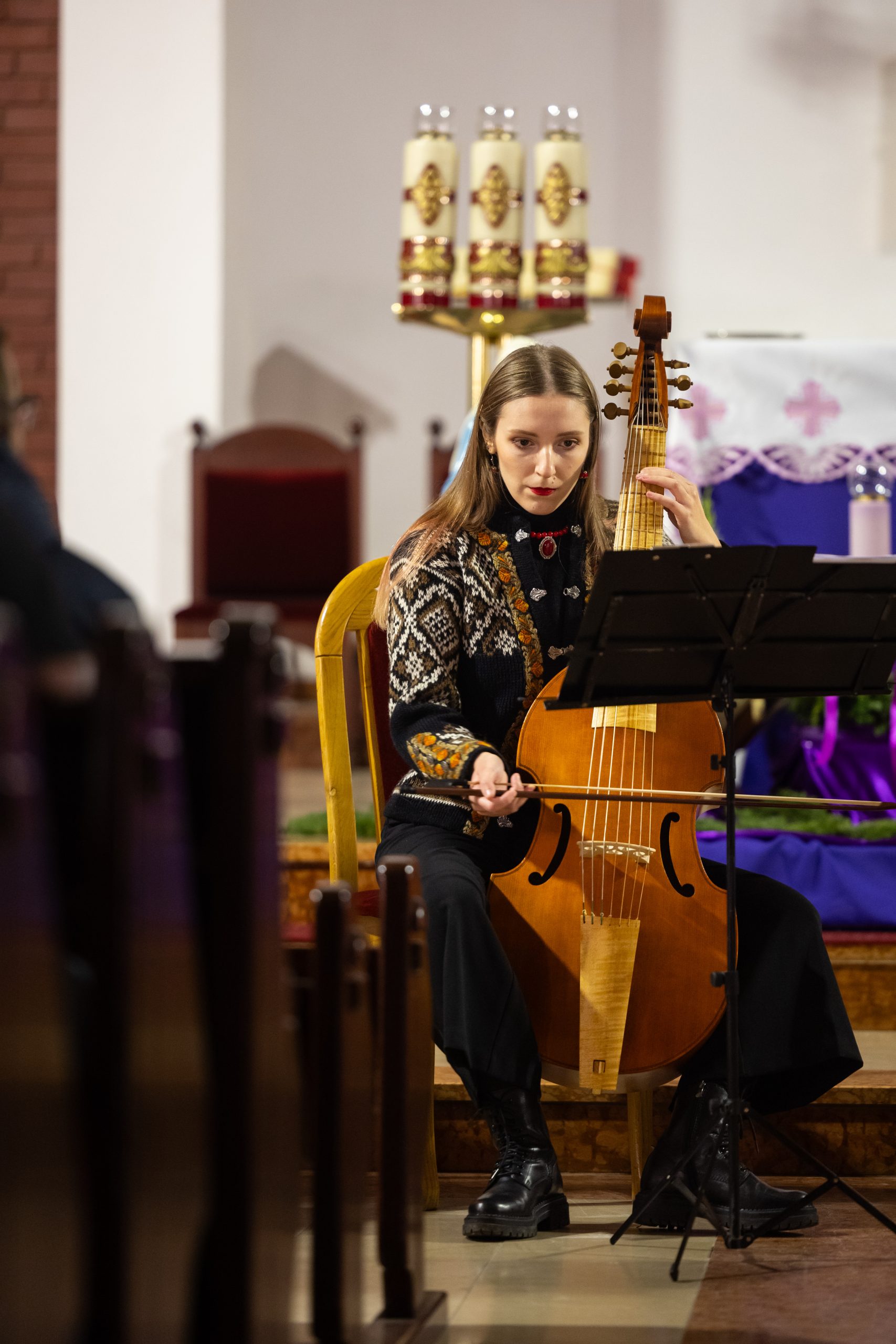
Karina Krychun, viola da gamba
Maria Korzeniowska, baroque guitar
Klaudia Łoboda, positivo
Choir
José Vidal Terceros, conductor
Programme
1. Trio Sonata from Chiquitos, 18th century
Anonymous
2. In hoc mundo
Domenico Zipoli
3. Laudate pueri
Anonymous
4. Quis me a te sponse separabit
Anonymous
5. Toccata in D minor
Domenico Zipoli
6. Zoiyai Jesus
Anonymous (Chiquitos Requiem)
7. Aqui ta Naqui
Anonymous (Chiquitos Requiem)
8. La Salve para la Virgen (litany)
Anonymous
9. Cantemus Domino
Johann Joseph Brentner
10. Beatus Vir
Domenico Zipoli
11. Gloria et Honore
Johann Joseph Brentner

Portfolio
¡Al Candido Velo!
Missa San Ignacio